Poles Apart

The Polish elections to be held on October 15th are more important than many think. For Poles it may be the most important election since the fall of communism given the near existential struggle between liberal, pro-EU candidates (led by Donald Tusk) and ‘illiberals’ who increasingly resemble the Trump Republicans.

For reference, the incumbent ‘illiberal’ PiS (‘Law and Order’ led by Jaroslaw Kaczynski) has 35% support with Donald Tusk’s liberal Civic Coalition party on 28% and the three main smaller parties each with close to 9-10%. For Europe the election will be telling geopolitically, and notably for the way it reflects upon other EU countries like France and Germany (Slovakia which faces a similar contest goes to the polls this weekend).

Poland has the potential to become a driving force in Europe, or a thorn in its side. It has changed and developed rapidly in the last twenty years, but it is fair to say that its story is not as widely told and appreciated as other ‘miracles’. It interests me particularly because the way Poland has changed rhymes with what has happened in Ireland in the past thirty years.

Poland’s election is, even by the standards of other ages and countries, a very dirty, contested one, that was poisoned by the introduction of several referenda questions on divisive topics like immigration. In addition, the PiS have not shied away from anti-German sentiment and this will have long run consequences.

A bribery scandal where members of the PiS have been found to have offered visas to immigrants for cash has complicated matters further and provoked a deeper row with Germany which has threatened to closely police its border with Poland. Another strange incident has been the banning of Ukrainian grain by Poland, Hungary and Slovakia (ostensibly a sop to local farmers) and the brief ban on arms exports by Poland to Ukraine.

This is one of a range of issues where there is tension, to be polite, between Poland and the EU. I have a lot of sympathy with Poles who feel that they are condescended to by the ‘older’ European powers. That sympathy is in short supply however when I hear the arguments of the ‘traditional right’ in Poland. One such individual is Dominik Tarczynski, a Polish MEP and amateur exorcist.

He recently lectured fellow MEPs on the fact that Poland had suffered no terror attacks because it refused to allow in illegal migrants, the logic of which will have upset his colleagues. Tarczynski is guest on Fox news, where this kind of message goes down well, despite the reality that the deadliest form of terrorism in the US is from the far-right (the FBI has warned on this multiple times).

Another throwaway comment from Tarczynski – that unlike the larger ‘old’ countries, Poland is a high growth and low debt country, deserves a bit more attention. In 2030 Poland will likely be a richer than the UK and it has barely registered a dip in growth in the past thirty years. This is in stark contrast to Spain, Italy and France where last week the text of the 2024 budget was being finalised by Bruno Le Maire, France’s Finance Minister.

Whomever is in power in Poland in coming years will enjoy a strong economy (though with a compromised central bank) whilst the next (and current) occupant of the Elysée will have zero fiscal space. With government spending at 60% of GDP and debt to GDP easily above 100% France has little room to spend more. My hunch is that this will need to lead to greater innovation in its democracy and how the state is run, but not before further unrest perhaps.

This is why Poland becomes important. A victory for the ‘illiberals’ could have significant implications across European politics – it would deepen the divide between the Commission and countries like Hungary and Poland that do not adhere to the ‘European values’ framework, it could well complicate policy on Ukraine (though ultimately the main Polish parties are resolutely anti-Russian), and it might open up a new ‘Republican’ style debate on European politics and economics.

On the other hand, an EU friendly government led by the former European Council President Donald Tusk would be much less an irritant but rather a leader on foreign policy – notably in pushing countries like Germany to re-arm, in building a central European consensus and in pushing the growth narrative in Europe that is so lacking from Italy and France, and potentially becoming an industrial base with access to low energy (Poland is investing heavily in nuclear energy).

With the consensus that 2024 is the important election year, Poland might well be the political surprise.

Have a great week ahead,

Mike

Batteries not included

The German Green party are a curious lot, one of the few large Green parties to attract a large share of the vote and to occupy the centre, and on foreign policy  (on Ukraine) to show themselves to be consistently hawkish. Annalena Baerbock, the German foreign minister is emblematic of this, and is one of Europe’s more original politicians.

An illustration of this is that last week she journeyed to Washington, via Texas. The trip will have been instructive in many ways, granting a sense of why Republican voters are so drawn to Donald Trump, witnessing Texas’ dual energy economy which blends fossil fuels and green technology, as well as the reasons that the Texan economy has managed to draw entrepreneurs and investment from the west coast.

In many ways Germany is the opposite of Texas. Its energy policy has been upended by the strange logic of the Merkel government and by the side-effects of the war in Ukraine such that it has neither fossil fuels, nuclear nor green energy in decent supply. In addition, its economy is experiencing a sharp cyclical downturn with many indicators dropping to levels that in the past coincided with a recession. It lags other European countries on the pace of digitization and key infrastructure projects such as Berlin airport and the Stuttgart rail terminal have lagged badly in terms of execution.

Reflecting this is the drop in the competitiveness of German industry. The authoritative IMD Competitiveness Report of 2023 shows that Germany, which has habitually ranked around fifteenth place in the global competitiveness standings, but has dropped seven places to 22, just behind China and ahead of the UK. Germany’s travails in energy, industry and politics are now characterized (in a Scholz speech) by Zeitenwende, or turning point, which I think is akin to my own idea of the Interregnum.

Germany may now find itself at the centre of an economic security storm. With Chinese electric vehicles (from companies like BYD) arriving on Europe’s shores, some countries (Italy and France) with large car markets in Europe have pressured the European Commission to investigate China for commercial dumping and state aid. Given the exposure of German auto manufacturers to China (Volkswagen has about 14% market share) my expectation was that the EC would wait to curb China’s export of cars.

In that context Ursula von der Leyen’s announcement of an investigation into Chinese electric auto exports was an aggressive move (please note that it was made in a ‘campaign’ speech as she positions for re-election). In addition, the French ministry for the ‘Green Transition’ will recalibrate government grants for the purchase of electric vehicles so that these will no longer apply to the majority of EV’s from Asia. Also, the German Bundesbank, oddly, has warned German industry of the need to ‘de-risk’ from China.

If that is not enough, Baerbock referred to Xi Jinping as a dictator during her trip across the US. None of this has pleased the Chinese, who unleashed now characteristically overstated rebuttals in the international media, and who might just find subtle ways of undermining German car sales and EV production (Europe depends a lot on Chinese battery materials and technologies).

One element of the German response to falling competitiveness is to use state aid to attract foreign investment (e.g. Intel). A much better response is that of von der Leyen who has asked Mario Draghi to undertake a study of the competitiveness of European countries.

He could do worse than start with the IMD data, which shows that the top eight countries are small economies, most of them small, advanced economies (Denmark, Switzerland and Ireland are the top three).

Regular readers will know that David Skilling and I have ploughed a deep furrow on the success of policy making across small, advanced economies and we will be scribbling notes to Mr Draghi. Germany has traditionally done many of the things that small, advanced economies do well – training, research and education. It has fallen down on capital markets, clarity of policy, corporate governance, coordination with other economies (from France to Poland) and it does not have a method to help German businesses work with those from other countries to become European champions.

Notably in the context of Zeitenwende, our sense is that the larger economies of the world are much less alert to changes in the structure of the world economy than smaller ones are, and equally the larger countries are slower to change. Perhaps Joe Biden’s industrial policy is the exception here in terms of how quickly it is re-shaping the American economy. We can only hope that Foreign Minister took good notes.

Have a great week ahead,

Mike

The Fourth Pole?

Regular readers will now be well aware of the thesis of the Levelling – that globalization judders to a halt and is replaced by the unsteady formation of a multipolar world.

In 2018 we wrote that ‘Geopolitics will be dominated by three significant players: China-centric Asia, the Americas, and Europe. India may constitute a fourth pole, but its time has not yet arrived. These will be the players in the Great Game of the twenty-first century. (Peter Hopkirk’s book The Great Game: On Secret Service in High Asia, on the strategic battle between Britain and Russia in the nineteenth century, is a must-read as background.) For example, China’s One Belt, One Road infrastructure and trade project is a definitive Great Game–like manoeuver.

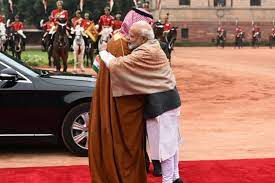
Reflecting on this, the Belt and Road is now fading into the past (Italy is leaving soon) and I would still strongly recommend Hopkirk’s book. The new development is the ‘seeding’ of a potential ‘Fourth Pole’ of the world order around India and the Gulf states and Saudi Arabia.

One of the key developments of an otherwise disappointing G20 meeting in India was the announcement form the US, India, Saudi Arabia, the United Arab Emirates, France, Germany, Italy and the European Union of a project to create a new India-Middle East-Europe Economic Corridor (railways to ports) as a pillar of the G20’s Global Infrastructure initiative. Amidst the rally of India as a geopolitical player and economy, and the rapid and historic remaking of alliances across the Middle East, the key question is whether the combination of India and the Gulf/Arabian states could become a bona fide Fourth Pole on the geopolitical landscape.

This notion is still in its ‘venture’ stage and there is much that could derail it – from climate change to Narendra Modi’s antagonization of his muslim population to a collapse in the price of oil.

However, if the progenitors of the ‘Fourth Pole’ are reading, there are two broad criteria to watch – the first is a coherent mass and the second is a coherent method or way of doing things.

In terms of the first, Europe, the US and China have ‘mass’ economically and financially (single markets, currencies), diplomatically (Europe is increasingly coordinated, and we know what China is thinking even if its foreign minister disappears for weeks on end), industrially (Bidenomics, Strategic Autonomy and state driven Chinese entrepreneurship) and militarily (all three are nuclear powers with sizeable armies). By comparison, Russia for instance is not a ‘pole’ as it is not significant economically, industrially and has a toxic foreign policy.

India and Saudi Arabia, to take two of the Fourth Pole players, are meaningful economically though much less so as financial players (though Saudi Arabia’s reserves given it clout), and apart from India’s nuclear arsenal are not in the top division of battle-ready militaries (India has a large airforce but it would likely not perform well against say the Finnish airforce). Building ‘mass’ would take time and investment and would demand a coherence in strategy between very disparate countries, and currently there are few policy areas where there is policy collaboration at a detailed and well-coordinated level between India and say the UAE.

The second and essential element of multipolarity is that each pole has a defined ‘method’ or way of doing things – Europe is a liberal social democracy with increasingly coordinated policies, China has the ‘China Dream’ social contract between the Chinese people and the communist party while the US is making itself great, again. Each one has a distinctly different approach to technology, the internet and lately to regulating AI.

The India to Saudi Arabia corridor is yet very different in terms of its cultures and development models and is very far from have a common method. This is something that can arrive after at least forty years of close trade and cooperation, and in my view will be highly influenced by the Indian diaspora in countries as diverse as Kenya to Dubai.

In the context of this new project, there is a great deal of talk about the global south – effectively the fast growing, populous countries of Asia, Africa and Latin America. It does their individual cultures little justice to group them together, and the idea of the ‘global south’ vastly overestimates the ability of these countries to act as a single entity. The primary challenge for the ‘global south’ countries is to find ways to increase the level of trade between themselves. In the long run it may be that the India-KSA-UAE corridor becomes the organizing locus for the global south.

These countries can take heart from the early days of the United States (for example the ways in which Alexander Hamilton bound individual states together during the Whiskey Rebellion) and the fact that the EU itself started off as a trade and infrastructure project (Coal and Steel community). For the moment, they need to be patient, not over-reach and concentrate on trading more together.

AI in NI?

I spent the start of the week at the imposing Stormont building in Belfast. It has been the centre of power in Northern Ireland for nearly one hundred years, and hosts Northern Ireland’s Assembly, which notoriously now has not sat for over a year, something the vast majority of people in Northern Ireland would like to see rectified Notwithstanding this the local economy is strong (unemployment is 2.7%) and this weekend there will be a US led investment conference in the city, which amongst many other things, demonstrates the economic dividend of falling geopolitical risk.

Unfortunately, Northern Ireland is very much the outlier here, as geopolitical risk is on the rise across the international spectrum. One of the sharpest reminders that we are in a ‘war by other means’ environment is the ongoing ‘Chip Wars’, the latest salvo of which involved the Chinese government banning the use of iPhones by government employees (presumably as a form of leverage over the USA at the same time as Huawei is launching a new flagship phone).

Despite this I have found the lack of interest by  European firms (large and medium sized) in geopolitics to be striking.

In markets, geopolitical risk has rarely been a major factor over the past forty years, owing to the tailwind of globalisation (no wars amongst democracies and emerging markets have been on a path to growth). The events that signalled the cracks in globalisation – Brexit and the Trump trade war – were risks that investors needed to measure. In addition, as inflation has risen, the absence of quantitative easing has made markets more sensitive to geopolitical risk.

In today’s multipolar world where strategic competition is increasingly the norm, geopolitical risks loom large– from the risk that Donald Trump comes close to re-election, to the drive of Chinese technology into Europe (BYD cars have arrived) to the re-alignment of the European defense, aerospace and greentech industries owing to the war in Ukraine. Many of these risks are events that require a response and readjustment, others are more existential.

One important source of risk is the way governments react to landmark technologies such as Artificial Intelligence (AI). The ways in which the use (and abuse of these technologies) is framed and watched over can determine the shape of the industries of the future.

As an early mover on regulation, Europe’s response to AI is the EU AI Act, whose main contribution is to divide the application of AI into four pillars from harmless to very harmful (akin to China’s use of AI for social credit scoring). The fact that Europe has moved first sets the bar for other regulatory initiatives on AI, notably that being pursued by Chuck Schumer in the US and Japan’s G7 level ‘Hiroshima’ paper on AI.

One area of vibrant debate, and some confusion, that has opened up is that way in which companies – software, media, data firms – who do not necessarily ‘generate’ AI content formally but are at the centre of many of its processes, are treated. The extent to which they will be policed by the AI Act is not clear and we have not yet had detail forthcoming from the EU. Indeed, it may well be up to individual companies to try to take the lead within their own industries for setting out the ways in which they will treat and use AI (telecoms, retailers with large datasets for example).

An additional source of confusion lies in the use of AI by start-up firms, especially out of France (ironically), which is striving to become an AI innovation centre (it has a rich labour market here and the backing of key entrepreneurs). Their argument is that the Act might constrain innovation by new firms. One response to this may well be a ‘sandbox’ system where young companies are allowed to innovate in a regulatory sandbox, to a certain level of commercialisation. A related issue that is bubbling up is access to models (and data) for researchers, and whether we might begin to see more EU coordination on this.

We also need more detail on governance. It may well be that there is a top-level AI Office at the EU level, with then individual state AI Offices, or to make matters more complicated some countries may argue to have an AI office for sub-sectors (AI in telecoms, AI in banking for instance). This is not yet resolved.

A sure sign that AI is becoming the terrain of competition between the large nations is that the UK is trying to become the ‘locus’ of AI regulation, in the sense that it is signalling that it wants to be the coordinator of international regulatory activity, and in the same way as Geneva hosts the WHO, WTO, it wants to be the locus of AI standards.

The AI Summit at Bletchley (Nov. 1st and 2nd) will be an important milestone here. If the UK was to physically host an international regulatory body, why not have it in Northern Ireland?

Have a great week ahead,

Mike

March 4th

The worry is not so much that Trump is declared guilty, or innocent, but that in the Republican primaries that follow the court case and in the court of public opinion, a large number of Americans declare him to be their champion.

It is not impossible that Trump is sent to prison and wins the 2024 presidency from there (to my knowledge, the US constitution does not prohibit anyone who has been convicted, indicted or in jail, from running and becoming president, though constitutional lawyers and potentially Congress might try to use the 14th amendment to bar him from holding office’.

As always, the only winners will be the lawyers, and perhaps the media (Twitter, or X, will soon allow paid political ads).

My interest is what the reaction of the world beyond America could be to its potential descent towards a deep civil schism and, if opinion polls are to be believed, a presidential candidate who has vandalized all of the sacred, historical tents of American democracy. A victory for Trump is one thing, but an American public that detonates the foundations of the US is quite something else. We would lose America as we know it.

I could write reams on how bad this could all be, and others surely will. The relevant point is that with March 4th set as the date for the Trump trial, other countries, notably the autocracies, are already preparing for a difficult period for American democracy (as are many in Washington), and the possibility of a highly controversial year in American politics.

Some European leaders like Emmanuel Macron, who has plenty of experience with Trump, have already flagged the risks of the above scenario, but other European states like Ireland are so deeply tied to America (last weekend Notre Dame played the Navy in an American football game in Dublin) that the shock would be enormous.

European leaders have already contended with Trump and indeed, with a range of policy surprises from the Biden White House (IRA Act, AUKUS) but in general working relations between Washington and Paris/Brussels/Berlin are good now.

In general, Europe has risen (slowly) to meet the challenge of autocrats (European foreign, security, enlargement and industrial policy have changed dramatically in response to Russia), though it could be all the more decisive with Viktor Orban. ‘Losing America’ as we know it would be chilling, but some governments and policy experts in Europe are beginning to brainstorm this possibility and there is a long list of ‘to dos’.

Autocratic economies are faring much worse than democratic ones, a trend that highlights the first risk of a popular wave of support for Trump, that its consequences could lead to a loss of faith in US financial assets. Imagine if Trump declared that the US had no obligations to the overseas holders of its debt, and or ordered the Navy to occupy Greenland.

The euro and European government debt might likely become more of a safe haven asset, some wealthy Americans might move to Europe and the UK, and the difficulty of running economic and foreign policy in the US may well mean a period of heightened uncertainty is ahead.

Geopolitically, Europe may want to pre-empt some of the risks associated with this scenario by eradicating as best as it can Russian influence within European countries like Germany and Austria, and in my view should take a much more severe stance on Hungary’s government. Poland, which holds elections in October will be a vital cog in this setup, as will the Baltic states. A more aggressive stance would be to surge military support for Ukraine, across different domains (cyber, financial, hard weapons).

Operationally, Europe also needs to accelerate and deepen the implementation of its Economic Security Act and to bolster it with much greater, and more ruthless resourcing of banking and payments oversight. The coming US election will make the risk focused EU AI Act look sensible, especially as the use of AI in social media and politics is concerned (though the Act won’t be in force by then).

In this respect, even the threat of another Trump presidency could be the forcing element that defines the multipolar era, when Europe finally realizes that it must rely on its own resources – as it is increasingly doing. There would likely be little change in Europe’s relationship with China, which is based on ‘de-risking’ rather than ‘de-coupling’.

If this scenario comes to pass, we will badly miss America as we know it, but there is no excuse for this outcome being a surprise.

Have a great week ahead

Mike