War and Peace

I have flown over Mecca a few times on the way to Jeddah and in particular, flights during the Hajj are memorable. Usually, the pilot played prayers on the intercom as the plane approached the holy site, and most of the passengers were taken up with prayer – in a way that perhaps only an Irish Catholic could appreciate. More impressively, sights of the enormous infrastructure that spans Jeddah airport to Mecca gives a sense of the hundreds of thousands of pilgrims that visit Mecca every year from across the Muslim world.

Notably, in a few months Iran’s Shia Muslims may be made welcome to Mecca following the agreement between Iran and Saudi Arabia to reestablish diplomatic relations, under the diplomatic stewardship of China. I am not sure that this event immediately heralds a geopolitical revolution in the Middle East but it is significant in many ways, and will at the margins reduce tension between the countries of the region (‘no problems with neighbours’), though may also provoke stress between the regions beyond the Middle East.

For Iran the deal brings several positives – even more trade with China, the mantle of a ‘responsible’ regional actor, the chance to consolidate its overwhelming influence over Iraq and Syria, a lesser commitment of resources to Yemen and less intense pressure on domestic Iranian politics from Saudi related media outlets (notably those in London). Also, the prospect of a visit by President Raisi to Saudi Arabia will add legitimacy to the Iranian government at a time when protests there have been widespread.

For Saudi Arabia there are also multiple benefits. Notably, a calming if not an end to the war in Yemen and by association, attacks into Saudi Arabia itself. Its oil infrastructure and access to drinkable water will be more secure now. Closer commercial ties with China will be welcomed at a point where the Kingdom’s currency has weakened and when inflation is high, and a corollary of this will be pressure on the US to ‘charm’ Riyadh.

Diplomatically, Saudi Arabia now has a dangerous hedge- it plans to join the SCO (Shanghai Cooperation Organization – about which we have written much in ‘The Levelling’) as a ‘observer’ member, which we might think of the SCO as a China led anti-NATO gang. The motivating force behind this deal is Saudi Arabia’s Crown Prince Mohammed Bin Salman (MBS). He is hugely ambitious for his country, and while young people in Saudi Arabia enjoy far, far less freedom than those in Iran, the relative change in their lives and expectations in recent years has been very significant.

Broadly for the region, the reestablishment of diplomatic ties should see a shift in emphasis from local geopolitical tension to economic growth. For China, it is a major win, notably in terms of trade – it accesses oil from both Iran and Saudi Arabia, will promote the use of its currency in the region (similarly a recent trade deal with Brazil will boost use of the yuan) and will invariably sell more Chinese goods into the region, not to mention access its real estate markets.

China will also host an Arab-Iran summit in Beijing later this year, a move that underlines the view EU President Ursula von den Leyen expressed last week in a keynote speech that ‘China’s clear goal is a systemic change of the international order with China at its centre’.

If China is a winner, then in this increasingly bifurcated world, the US must be the loser.

The announcement of the deal came at a time when Western banks were collapsing, and strikes and riots disrupting European capitals, so to an extent it has passed under the radar. It confirms my view of rapidly changing geopolitical tectonic plates, and China’s aim to realign the world along autocratic/East v democratic/West lines. The Chinese may well feel that twenty years on from the invasion of Iraq, the West’s grip on the Middle East has decisively loosened. They should also be careful not to think that meddling in the Middle East is a prerogative of great power status.

There are maybe three tests of this new alignment. One is very simply the extent to which the reopening of diplomatic ties produces any real ‘warmth’ between Iran and Saudi Arabia. The second is whether the coming global recession further weakens local currencies and specifically will lower the price of oil, and thus local economies.

The third test may come from Israel and focus on Iran’s quick march towards acquiring a near functioning nuclear weapons program. The war in Ukraine has seen Iran emerge as a sophisticated producer of military technology and granted that it is now producing a very high grade level (84%) of enriched uranium, Iran could be considered to be in the antechamber of nuclear powerdom. This may prove a threshold too far for Israel and many armchair wing commanders

In this respect, the protests that have dramatically gripped Israel in recent months in the light of the Netanyahu government’s attack on Israel’s institutions have thrown the country into disarray at a critical moment. This is nearly entirely Bibi’s doing, and it may just become his greatest mistake.

Have a great week ahead,

Mike
On est là Macron!

At the beginning of a recent journey to Ireland from Paris, the French taxi driver asked me how our new king was getting on (many of them think Ireland, Scotland and England are the same place). I immediately launched into the obligatory, angry lesson in Irish history for his benefit. When I calmed down, I told him that his majesty was doing fine, or least a lot better than the prime ministers who have served him.

I even mentioned that well over ten years ago I met Charles III, ahead of a momentous visit by the late Queen to Ireland. The Queen’s visit went very well, despite obvious security concerns, and it played an important part in reconciling Ireland and England. Since then, Charles III has visited Ireland a number of times. Given this experience, Charles could at least have crossed the Channel.

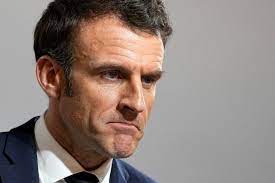
With the French state having marked the passing of Elizabeth in an elegant and warm way, Charles had nothing to fear for himself, save that an arrival into France might seem like stepping into a scene from Les Misérables (not so long ago London was a grumpier town than Paris). Piles of rubbish, fires and violent riots are the order of the day, all it seems, because Emmanuel Macron has in the eyes of the French people, been behaving like a king.

I have a lot of sympathy with Macron’s desire and need to drag the French pension system into the 21st century, and he has the heft of demographics and France’s weak financial state to back him up. That pension reform has become a battle ground, has much to do with other factors – deep frustration at an inflexible labour market, the use of article 49.3 to pass the pension reform law and the perception of Macron as ‘Jupiter’, an imperious, aloof ruler.  

I think he has missed a significant political trick in not making more of the fact that his government has managed to bring unemployment down to multi-decade lows, and there have also been some improvements to gender income inequality.

However, the pension reform debate has jaded Macron, which given his role as the indispensable European politician, is not good. It has also started to draw into focus what French politics will look like when he ‘retires’ and how his party will fare.

Given the role of France in the world, I have no doubt that a crisis or two will pop up where he can prove his mettle.

A bigger, ambitious project for him is how to improve French democracy. Granted his personal aura and the use of article 49.3, many French people would believe that he is not well suited to undertake this, but at the same time, there are very few French public figures who have the ideas and will to change the way its democracy functions. Indeed, it seems to me that, like many other countries, there are more French politicians who are content to make political capital through the vandalization of the democratic apparatus.

The task, given that there is such a gulf in trust between the French state and its citizens, may lie in giving more power to them. Citizens juries and citizens assemblies have been tried, but unlike other countries where these mechanisms have worked well, there is little appetite on the behalf of the state to implement the recommendations of the citizens assemblies. Macron has notably not done so.

For the moment, he should heed the words of Thomas Jefferson (a statue of whom is not far from the Assemblée) that ‘The spirit of resistance to government is so valuable on certain occasions, that I wish it to be always kept alive. It will often be exercised when wrong, but better so than not to be exercised at all. I like a little rebellion now and then. It is like a storm in the atmosphere’.

Macron and colleagues may also want to challenge their opponents to come up with realistic solutions to solving France’s financial weaknesses and to enlivening its democracy. So far there are all too few willing to do so, and the longer their silence endures, the greater the final crisis will be.

For his part, Charles could at least have held his nose and carried on.

Have a great week ahead,

Mike

Automata

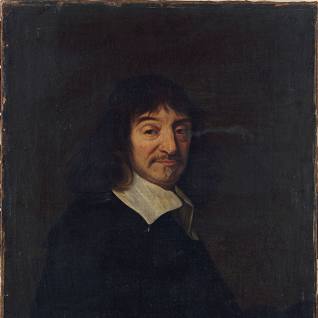
Portrait of René Descartes (1596-1650), philosopher and scholar. Artist Unknown. (Photo by Heritage Art/Heritage Images via Getty Images)

Philosophers amongst you will be familiar with the work of Rene Descartes – a mathematician, epistemologist, and rationalist – much of his work laid the ground for modern philosophy and in particular the strand that has grown out of Hobbes and Locke that informs a lot of the 17th century and the formation of states and societies thereafter.

There is one eerie and unsettling aspect of his life that is gaining greater attention. Descartes had a relationship with a servant (Helen van der Strom), and their relationship produced a young daughter Francine, to whom Descartes was very attached. Tragically, Francine died of scarlet fever, aged five, and so distraught was Descartes that he had a robot or automata (clockwork, lifelike doll) built in her likeness.

He transported this ‘doll’ with him whenever he travelled (in a casket), and on a trip to visit Queen Christina of Sweden, the crew of the ship on which he was travelling became so alarmed (it was a stormy night) by the robot and Descartes murmurings with it, that they invaded his quarters, seized and broke the ‘doll’ and threw it overboard. Descartes was further traumatized, and whilst it is not clear the incident immediately impacted his health, he died soon after.

Descartes ‘doll’ is enjoying renewed attention for what it suggests about the relations between humans and machines, how robots can potentially replace and even supplant humans in different ways and for the manner in which this can cause consternation.

The relationship between human and machine is a theme that will cut through the advance (or decline) of the world, and we have written about it frequently (i.e. ‘Talos’). As my limited vision can perceive,  will attempt a classification that says there are at least two aspects of this megatrend – the risks that machines take over our (human) world (AI), and the risks that machine led worlds start to exist outside the human one (Defi, Web3/metaverse).

The bad news is that in the case of the former, there is an unknown risk that machines could injure the human race (weaponized AI, the use of AI by ‘bad’ humans and the use of robots in war not to mention the creation of chemical and biological weapons by AI that I referred to in ‘The Final Problem’).

The good news is that ethereal new worlds – Web3 and Defi (decentralized finance), whose architects had boldly proclaimed were independent of the ‘old’ system, now look like they will be adjuncts to it.

While much of the early hype around Web3/metaverse suggested it was a place that humans could stay in for considerable amounts of time, it now looks like a country they can visit or ‘pop in to’. This much was made clear to me as I attended the Validify digital retail conference in Hertfordshire last week, where the consensus view is that Web3 can help consumers (try clothes or mock up house decors) but will not necessarily become a domain that rivals ‘our world’.

Much the same is true of decentralized finance, which has so far failed to rival in the incumbent financial system, but where its most useful elements such as digital asset infrastructure, are being adopted by incumbent financial system players.

In both cases the growing modesty of new ‘inventions’ is correlated with rising interest rates (and falling market liquidity), highlighting that (as with Descartes time in the Dutch Republic in the 1630’s and 1640’s when the Tulip Bubble took place) many triumphs of innovation are to a large extent cheap money in the drag of new technologies.   

In some cases, cheap money and – good design/branding – allows new technology led companies to grab market share, to build new supply chains and to generally make consumer life easier (a small number of fintech and consumer platforms do this). What cheap money also does is allow investors and the wider commercial marketplace to believe that ‘new commercial worlds’ (like the Metaverse) can be created and will have corresponding commercial potential as the human world. The tide is going out on this idea.

To some extent, as expectations of the potential of the metaverse and decentralized finance are deflated, investors and analysts should become more circumspect about AI. AI, the metaverse and defi are very different things – though all driven by the same capital markets, venture capitalists and evangelists.

To my own experience, AI is rooted in data regression analysis – which makes me cynical about it given the time I have spent on econometrics. I do think it is different to Web3/metaverse and defi in that AI can potentially operate in and build out both of these ‘worlds’, as well as ours. AI driven computer programing is an example of such a productivity enhancing application.

What potentially makes it interesting and deadly, to my earlier point, is that it can evolve and enhance the way it has been structured by programmers, to the extent that, to quote Descartes ‘it thinks, therefore it is’. That’s something to worry about.

Have a great week ahead,

Mike

Brexit peters out

Brexit might be over, at least in the sense that the ‘Windsor’ framework brings much of the legal and political wrangling to an end and opens up the vista of better relations between the UK and the EU. Economically and strategically though, Brexit lives on.

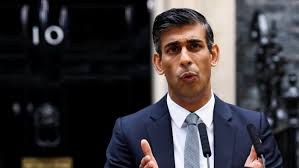
One of the accomplishments of Brexit has been to set very low standards in political behaviour and a very high benchmark for the absurd, so it was no surprise to hear Rishi Sunak praise Northern Ireland’s newfound status in that it enjoys open trade with both Great Britain and the EU, though I did blink once or twice. The risk for Sunak is that Scotland and Wales might want the same, not to mention England.

The Windsor framework was also a coming out of sorts for Sunak as an independent political creature, one that is analytical (the first prime minister to have an MBA) and unusual, in that he does not have the same amount of political baggage as other Tories. In that context he is less attached to the unionist point of view and slightly more rational than some of his predecessors.

Politically, the Windsor deal means several things.

First, the bad blood between London and Brussels is likely over and there will be a more pragmatic, productive approach to working together on defence/Ukraine, innovation and border policing. The EU will now have more political time to spend on ‘strategic autonomy’ and the reordering of its defence and foreign policy, while Sunak will have more time to spend tending to the British economy. Despite ‘Windsor’, Britain still owns Brexit and its economy will still be handicapped by it and still suffers poor productivity, a weakening housing market and anemic investment.

Second, speculation about the breakup of the Union – the reunification of Ireland and Scottish independence, will be tempered for the moment. As soon as Brexit happened my first thought was that it would catalyse dramatic, and hopefully constructive political change in Ireland and Scotland. As we noted last week, Nicola Sturgeon’s departure from Scottish politics plus the

recent ruling from the Supreme Court limiting a Scottish referendum have sapped the moment of the independence movement.

In Ireland, there is also the realization that the case for unification needs a stronger and arguably different basis in the sense of their being more cross border tourism, investment, commerce (this is picking up) and shared public goods (similar health systems for instance).

A lot of imagination needs to go into conceiving what a united Ireland might look like (Brendan O’Leary’s recent book on this is good), ultimately the structure of a united Ireland could well look like a Swiss style federation (see ‘Ireland and the Global Question’ (2006)!). What is also interesting is the role of demographics in changing Scotland and Ireland. This is noticeable in the sense of younger populations that are less rooted in traditional politics, as witnessed by the successes of the Alliance Party in Northern Ireland, and to a large extent the SNP in Scotland.

A third reason to be cheerful is for Northern Ireland itself. More than many other regions in Europe it has suffered the backwardness and intransigence of its own politicians, and the careless neglect of many in London. Whilst politicians in the Major and Blair eras had a sense of the complexity of the North, and in general were careful with this, a string of recent secretaries for state and prominent Brexiteers have displayed a shameless ignorance of Northern Irish politics and society, whilst at the same time treating it as a political pawn. That still seems to be the attitude of Boris Johnson.

My sense is that the vast majority of people across Northern Ireland desire a return to normalcy and I hope that the Stormont’ assembly now sits and the North enjoys a period of uneventful calm, and enjoys the benefits of close ties to the EU. The assembly members may have come comfort in the existence of the ‘Windsor’ brake, but some trepidation that it was designed by the same people who crafted the ‘backstop’.

In that respect, that Rishi Sunak referred to Northern Ireland as the ‘most exciting economic zone in the world’, which is probably an exaggeration that stems from his days as a hedge fund salesman. However, a friend of mine is leading a social impact real estate project to revitalize the centre of Belfast, and as I help along, I can see the potential there is for the city to grow (especially compared to other UK cities).

As a final word, Brexit cannot end until the villain at its centre stage is slain. Sunak now needs to take on Boris Johnson and the ever-delusional Liz Truss – by for example canceling the resignation honours lists of both former prime ministers, by cooperating with civil servants who are investigating multiple breaches of ethics and security by Johnson, suspending Johnson’s part membership and potentially by steering the Tory party away for awarding Johnson a safe seat at the next election. Labour will probably win that, and they could then remake British politics by changing the electoral system (introducing proportional representation for instance). Such a move might well shatter the Tories and produce a new party of the centre and a (far) right one.

If that happened, Brexit might well and truly be over. Though we might also miss it.